Subject
The very first thing to note about an object complement is that it comes right after the direct object. Secondly, it gives a name to the object or tells us the state of the object (using an adjective). Unlike a subject complement, an object complement is not followed by a linking verb. It takes certain action verbs.
Subject Verb Object Complement (SVOC) Sentences Banter Speech & Language

References: https://www.merriam-webster.com/ https://www.freepik.com/ https://www.pexels.com/ https://www.flaticon.com/ If you enjoyed and learned in this vi.
What is the Difference Between Subject Complement and Object Complement
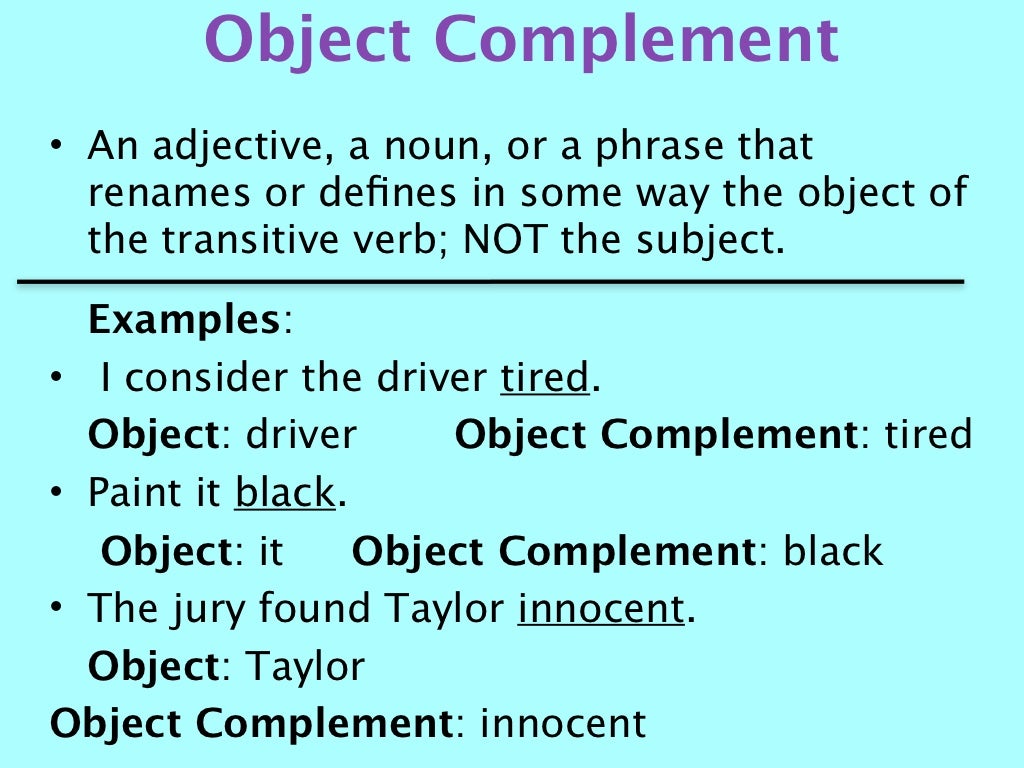
Object complement. Now study the following sentences: They made Harry Chairman. The President appointed him Governor. In sentence 1, Harry is the object of the transitive verb made. But if you say 'they made Harry', the sense is incomplete. In addition to the object Harry, we need another word to complete the meaning of the verb made.
Subject
Subject complement; Object complement; Adjective complement; Verb complement; Adverbial complement; Subject complement. Subject complement definition: A subject complement is a word or a group of words (phrase or clause) that either renames the subject or modifies it.It comes after a linking verb and identifies the subject. When it renames the subject, we call it a predicate nominative, and.
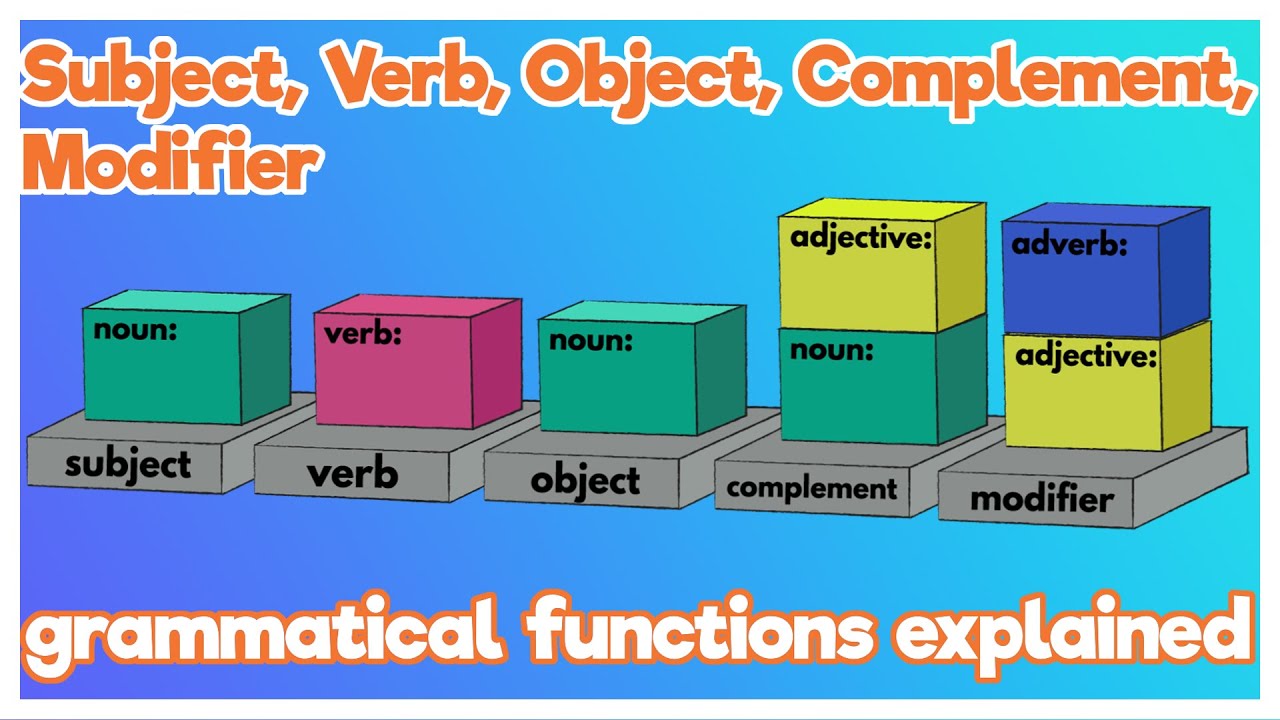
What is Subject, Verb, Object, Complement, Modifier Grammatical Functions [basic English
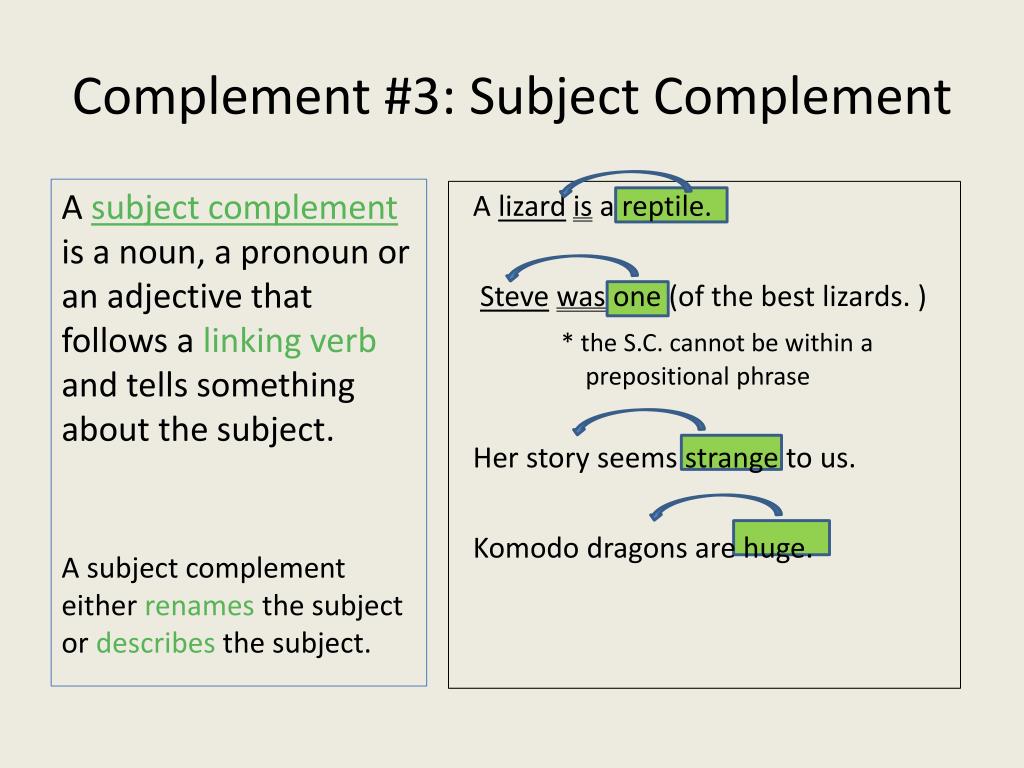
Subject complements are one of two kinds of complements. A grammatical complement is the part of a sentence's predicate that describes either the subject or the verb's direct object. It is essential for completing the sentence's thought. As we've seen, subject complements fill out our understanding of a sentence's subject.
Subject
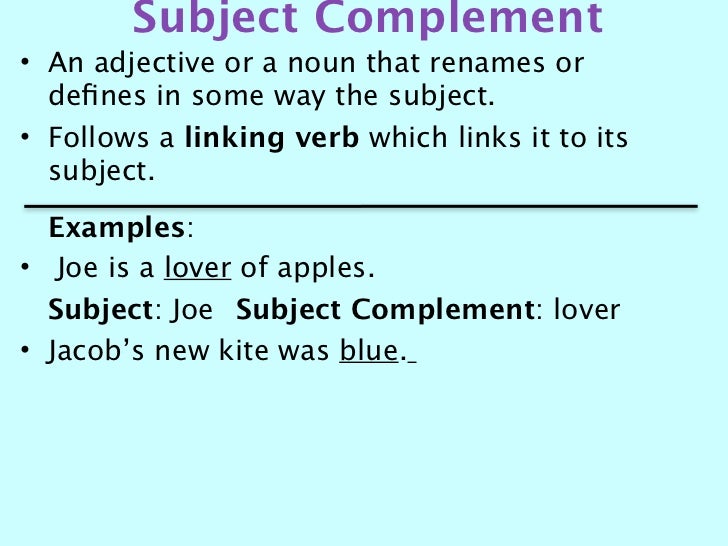
The Subject Complement does not represent a new participant, as an Object does, but completes the predicate by adding information about the subject referent. For this reason, the Subject Complement differs from the Object in that it can be realized not only by a nominal group but also by an adjectival group (Adj.G), as illustrated in the.
Subject Complement What is a Subject Complement? with Useful Examples • 7ESL

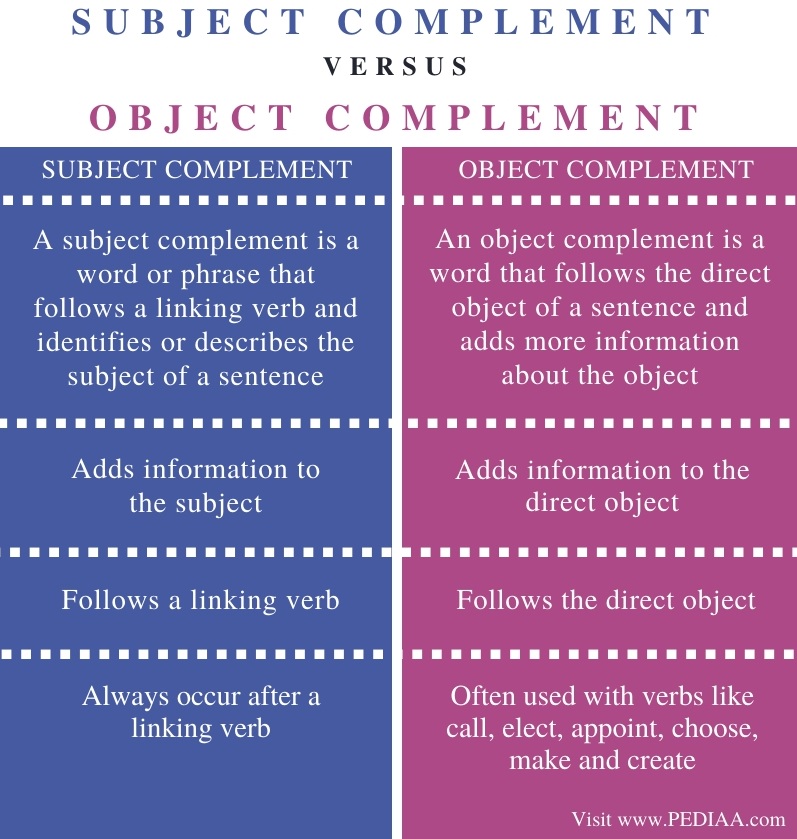
4 min read. The main difference between subject complement and object complement is that a subject complement adds information to the subject, whereas an object complement adds additional information to the direct object. Complements are one of the five main elements of clause structures. They are necessary to complete the meaning of a given.
Types of COMPLEMENTS in English Subject, Object and more

to become. A linking verb does not take an object, i.e., an object will not follow a linking verb. Rather, a subject complement will follow a linking verb. Subject Complement Example: Ray seems frustrated. "frustrated" is an adjective describing Ray. "frustrated" is not an object. A direct object follows an action verb.
Subject
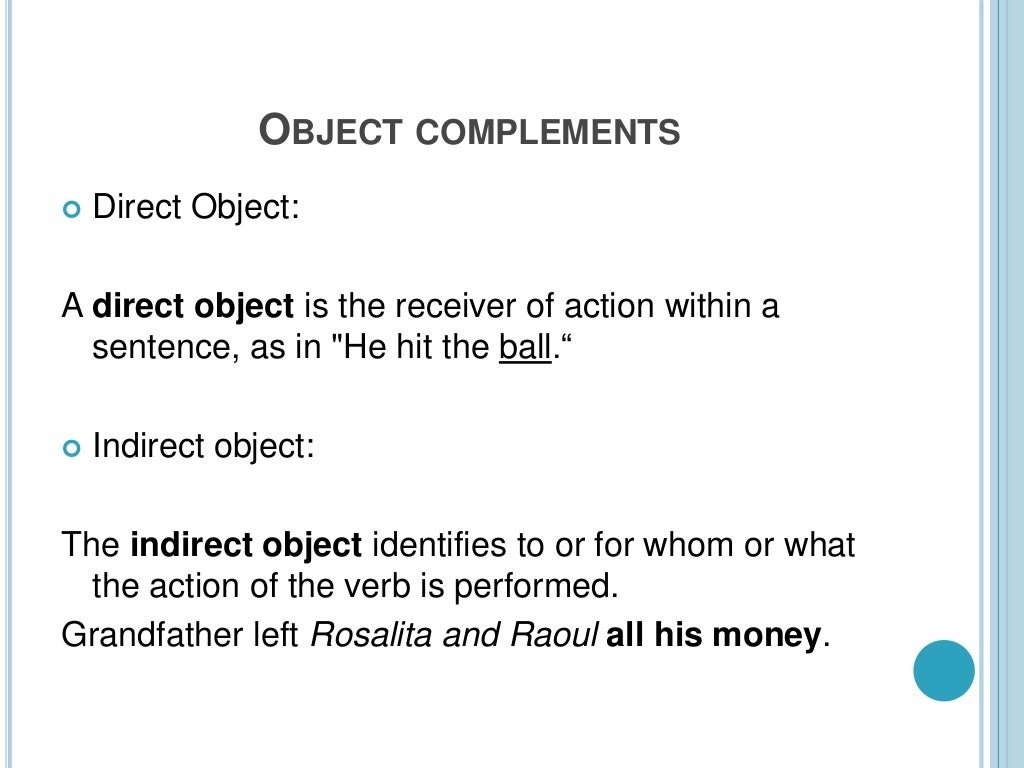
An object complement is a word or a phrase that describes, renames, or identifies the object of a clause. An object complement follows the object. It can be an adjective or adjective phrase, a noun or noun phrase, or a pronoun or pronoun phrase. It functions to modify or complete the object, thus providing more information about it or stating.
Object complements
What is a complement in grammar? It's a word, clause, or phrase that's needed to complete a given expression. For example, "Every morning is a gift." In this sentence, "a gift" is the complement. Read on to learn more!
How To Diagram An Object Complement

Subject complements - English Grammar Today - a reference to written and spoken English grammar and usage - Cambridge Dictionary
PPT Complements PowerPoint Presentation, free download ID3064231
Write a Sentence with an Object Complement. In this middle school activity students will write sentences using object complements. Grade Levels: 6th - 8th Grade, Grades K-12. CCSS Code (s): L.6.4.A, L.7.1, L.8.1. These free, printable worksheets help students understanding how complements work in a sentence. Click here to preview and print the.
Difference Between Object and Complement in English Grammar
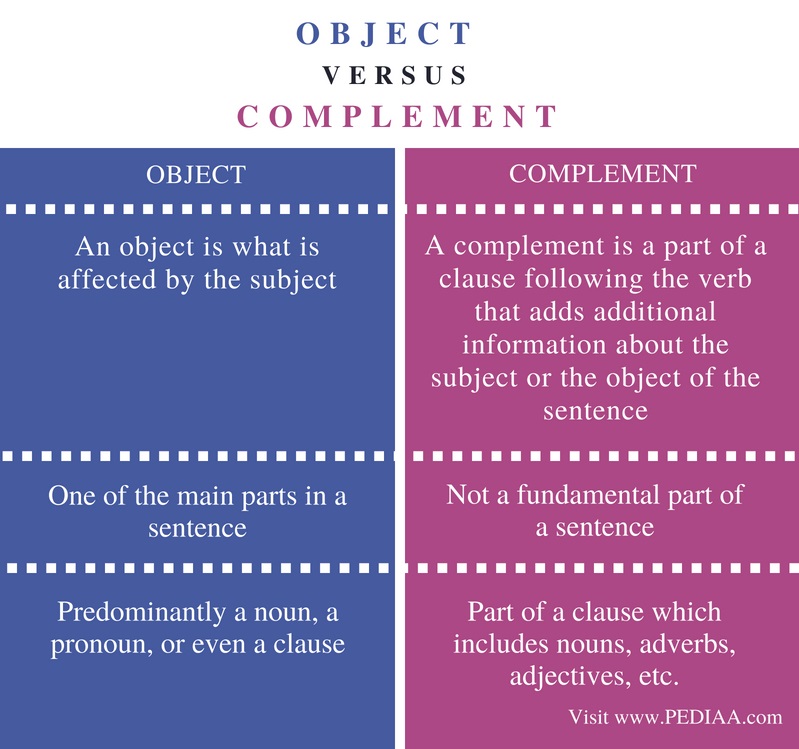
Object Complements and Adverbs . Barbara Goldstein, Jack Waugh, and Karen Linsky Be careful not to confuse sentences that look alike. Consider these two sentences: He called the man a liar. He called the man yesterday. Man is the direct object in both sentences. In the first sentence, liar renames the man, so it is the object complement.In the second sentence, yesterday is an adverb that tells.
Difference between the Subject Complement and the Object Complement
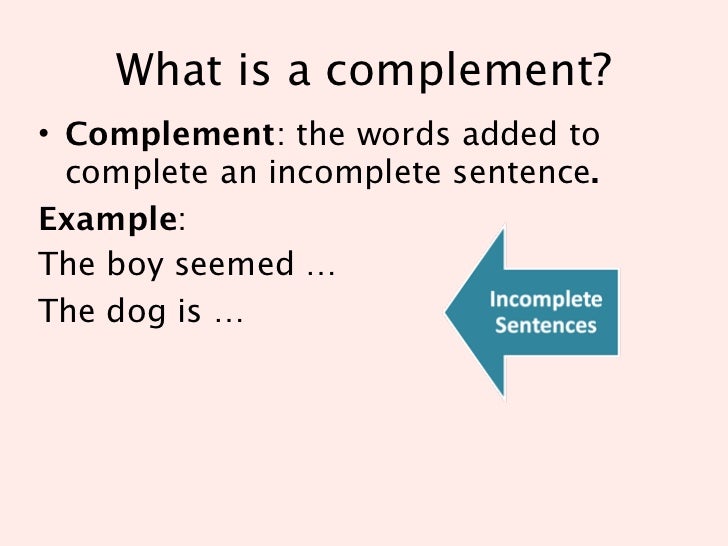
The word "complement" means "something that complements or gives a sense of completion to something else". Complements, along with subjects, verbs, objects, and adjuncts, form one of the five major elements of clause structure. While a subject complement helps make the subject complete, an object complement works hard to complement an object.
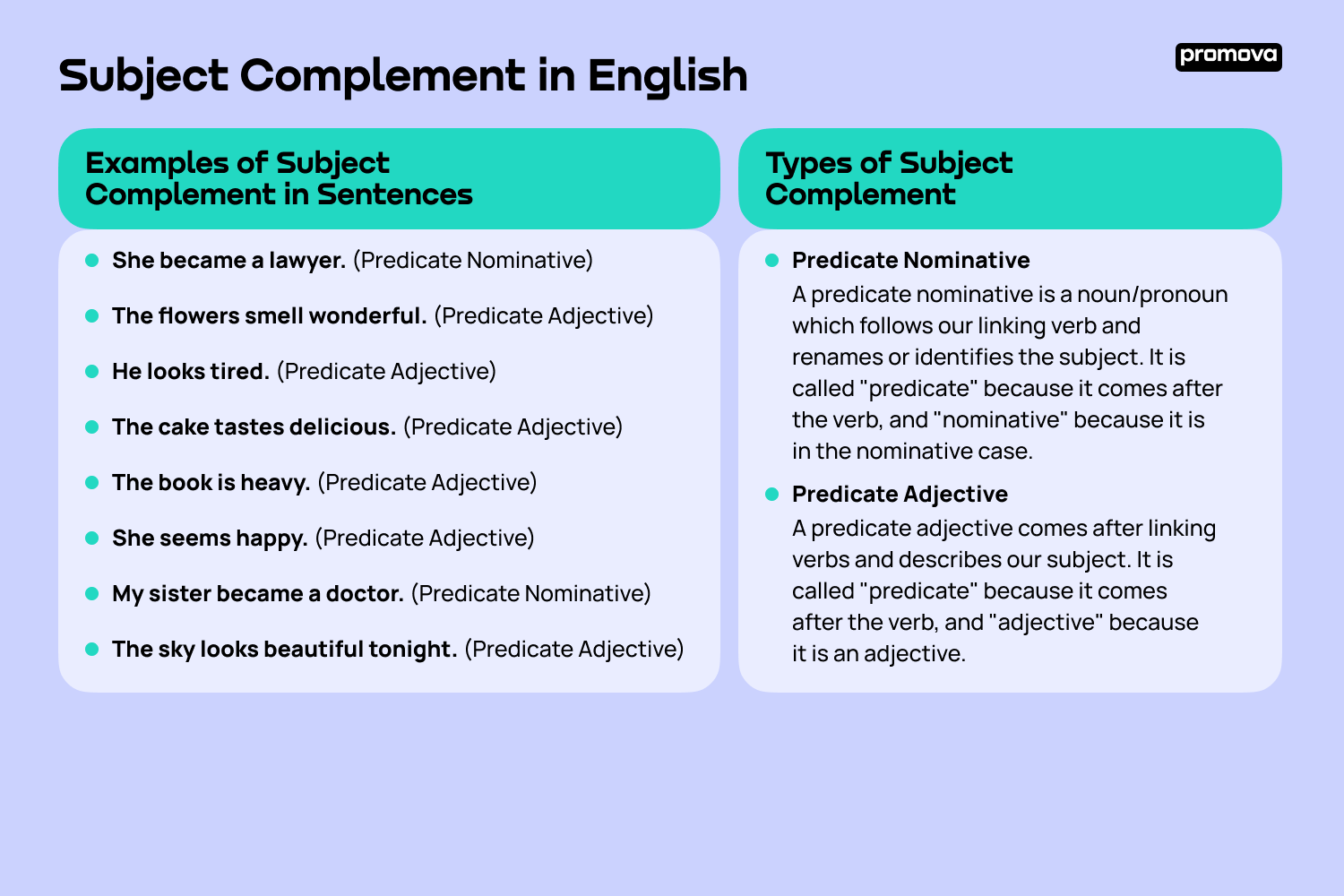
Subject Complement Promova Grammar
A complement also plays a vital role when we think of making a sentence more complex and thus more meaningful. The difference between object and complement in English grammar is that the object is what is affected to the action of the subject while the complement is a part of a clause that usually follows the verb and adds more information.
What is Complement in Grammar Subject Complement & Object Complement Complement vs Object

A subject complement is either an adjective, a noun, or a pronoun. Easy Examples of Subject Complements In the examples below, the linking verbs are in bold and the subject complements are shaded: Ben is a policeman. (The linking verb is "is" (i.e., the verb "to be"). The subject complement identifies the subject "Ben." It is a noun.) He will.